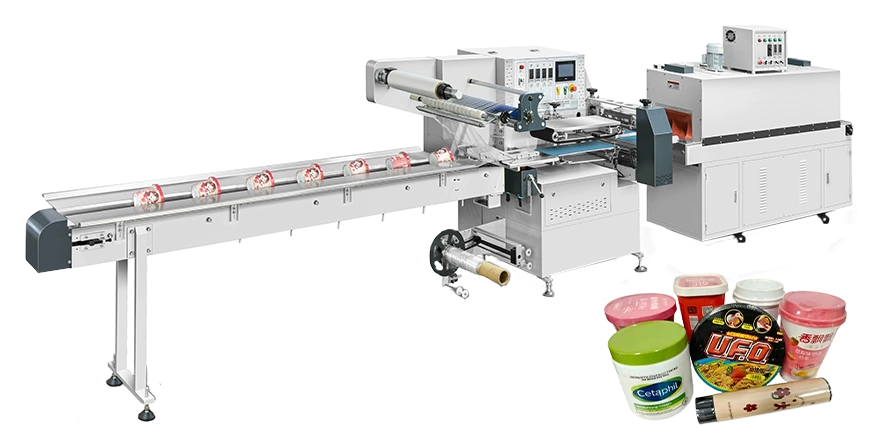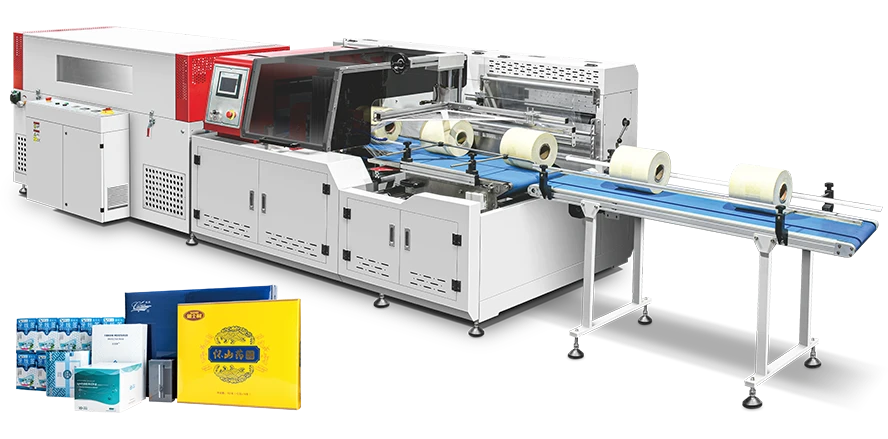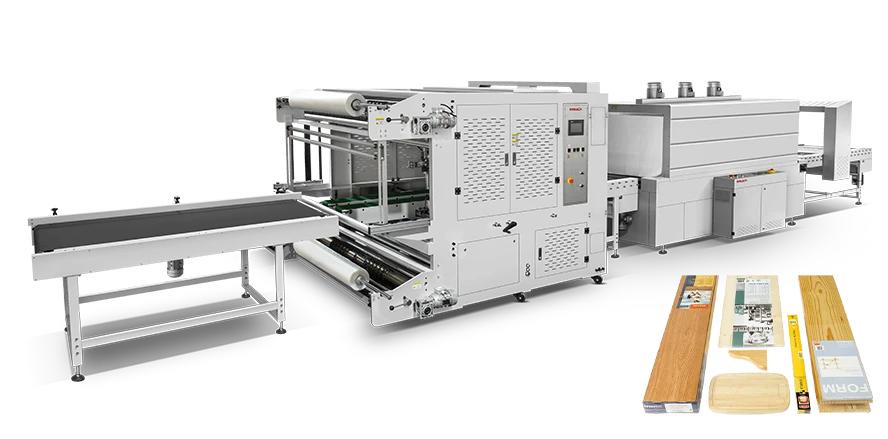

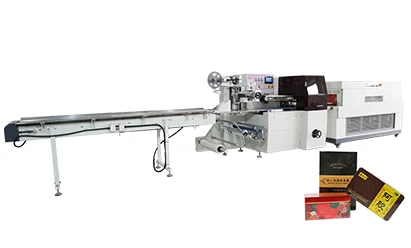
If you have ever watched a high-speed packaging line in operation, you know how much happens in the space of a single second. Film unwinds, products feed in, seals form, cuts happen, and the finished pack disappears into a shrink tunnel—all while the machine keeps running without pause. Understanding the working principle of an automatic high speed shrink packing machine is not just technical curiosity. It is the foundation for making smart decisions about your packaging line, whether you are upgrading existing equipment or sourcing a new unit for a greenfield project.
The reality is that not all shrink wrappers work the same way. Some rely on mechanical cams and clutches. Others use servo motors and closed-loop control. The difference shows up in daily output, changeover time, and maintenance frequency. This article walks through the complete working sequence of a modern automatic high speed shrink packing machine, from the moment film feeds into the machine to the moment the finished product exits the shrink tunnel.
The Film Feeding System: Where Precision Begins
The working principle of any shrink wrapper starts with film handling. In a conventional machine, film tension is managed by mechanical brakes and passive rollers. That approach works, but it introduces variability. Film stretches differently as rolls change diameter, and tension fluctuations lead to inconsistent seals or film waste.
On a servo-driven automatic high speed shrink packing machine, film feeding is controlled by an independent servo motor. This motor maintains constant tension throughout the run, adjusting automatically as the film roll diameter decreases. The film travels through a series of guide rollers and a forming triangle that folds the flat film into a tube around the incoming product.
What makes this stage critical is the relationship between film speed and product speed. If the film moves faster than the product, you get wrinkles. If it moves slower, the film stretches and tears. The servo system synchronizes these two motions continuously, keeping the film wrapped snugly around each product without excessive tension. This is one reason why a properly set up automatic high speed shrink packing machine can maintain ±1mm sealing accuracy across thousands of cycles.
Product Infeed and Registration
Before film can wrap around anything, the products themselves need to arrive in the right position and at the right spacing. Most lines use an infeed conveyor that delivers products to the wrapping section. This is where the machine's registration system comes into play.
The infeed conveyor on a modern automatic high speed shrink packing machine is driven by its own servo motor, separate from the film feed and sealing sections. Photoelectric sensors detect the leading edge of each product and feed that information back to the control system. The PLC adjusts conveyor speed in real time to ensure consistent spacing between items.
This matters more than you might think. If products arrive too close together, the sealing cutter may close on a product instead of the film seam. If they arrive too far apart, you lose output. The closed-loop servo system eliminates the need for mechanical timing adjustments when product spacing changes—the control system handles it automatically.
Sealing and Cutting: The Heart of the Machine
The sealing and cutting station is where the film tube gets closed at both ends and separated into individual packages. This is also where the working principle of a high-speed machine differs most dramatically from slower or older designs.
Rotary Servo Cutter vs. Reciprocating Designs
Traditional shrink wrappers use a reciprocating sealing mechanism. The sealing bars move up and down, clamping the film between heated jaws, then releasing. This works at lower speeds, but at 100+ packs per minute, reciprocating motion creates mechanical stress and limits throughput.
The rotary servo cutter on an automatic high speed shrink packing machine operates differently. Instead of moving up and down, the sealing elements rotate continuously. The servo motor times the sealing impulse to coincide with the film seam as it passes through the rotating assembly. This continuous motion allows higher speeds—up to 120 packs per minute on standard models—while producing smooth, consistent seals without the burnt edges that can occur with intermittent sealing.
The sealing process itself involves heat and pressure. The film's coating layers (typically PE or POF) melt and fuse together under the sealing bar. On machines equipped with electronic torque anti-cutting, the system detects excessive resistance and prevents the cutter from closing on a product, protecting both the machine and the workpiece.
Positioning Stop Function
One detail that separates well-engineered machines from budget units is what happens when the line stops. On a basic shrink wrapper, if the machine stops with the sealing bars closed, the film can melt onto the sealing surface, creating a mess that takes time to clean.
On a high-quality automatic high speed shrink packing machine, the positioning stop function ensures the sealing cutter stops in the open position. This prevents film from scorching onto the sealing bars and reduces the time needed to restart production after an interruption.
The Shrink Tunnel: Where Film Takes Its Final Shape
After sealing and cutting, the package enters the shrink tunnel. This is where the film tightens around the product, giving it that professional, finished appearance. The working principle of the shrink tunnel is straightforward in concept but demanding in execution: apply controlled heat to the film while it moves through the tunnel.
Dual-Temperature Zone Design
A basic shrink tunnel uses a single heating zone. The film passes through one area of uniform temperature. This works, but it is not the most efficient approach. Film needs to heat gradually to shrink evenly, and different parts of the package may require different heat exposure.
The dual-temperature zone design found on better automatic high speed shrink packing machines addresses this. The first zone preheats the film, bringing it close to its shrinking temperature. The second zone applies the final heat, causing the film to shrink tightly around the product. Each zone has independent temperature control, allowing operators to fine-tune the profile for different film types and product geometries.
Hot Air Circulation and Energy Efficiency
Heat alone is not enough—airflow matters just as much. The shrink tunnel uses circulating hot air to transfer heat to the film efficiently. High-efficiency blowers move heated air through the tunnel, ensuring consistent temperature distribution across the entire width of the package.
This circulation system is also where energy savings come from. A well-designed tunnel recirculates heated air rather than exhausting it continuously, reducing power consumption. Some operators report energy savings of approximately 20% compared to older single-zone tunnels.
Waste Film Recovery: A Feature That Pays for Itself
One aspect of the automatic high speed shrink packing machine working principle that does not get enough attention is waste film management. Every shrink wrapper generates edge trim—the excess film trimmed from the sides of the sealed tube. In a conventional machine, this trim gets discarded.
On machines equipped with a waste film recovery device, the edge trim gets collected and wound onto a separate spool. This recovered film can be recycled or sold as scrap. More importantly, the recovery system maintains consistent tension on the film web, which improves seal quality and reduces film breaks.
The material savings are significant. Users of this type of automatic high speed shrink packing machine report film savings of approximately 20% compared to traditional center-fold film machines【0†L17-L19】. Over a year of continuous operation, that difference adds up to a real reduction in packaging costs.
Control System: Making It All Work Together
All of these components—film feed, product infeed, sealing, cutting, and shrinking—need to work in perfect coordination. The control system is what makes that happen.
The PLC color touch screen on a modern automatic high speed shrink packing machine stores recipes for different products. When you switch from wrapping tissue boxes to beverage bottles, you recall the saved recipe. The system adjusts film feed speed, sealing temperature, cutter timing, and tunnel temperature automatically. Changeover that used to take twenty minutes of manual adjustments now takes three to five minutes.
This is not just about convenience. Faster changeovers mean less downtime and more productive hours on the production line. For contract packers who run multiple products in a single day, the ability to switch quickly between recipes directly impacts the bottom line.
What This Means for Your Production Line
Understanding the working principle of an automatic high speed shrink packing machine helps you evaluate what matters when sourcing equipment. The servo-driven design reduces maintenance and eliminates oil contamination risks that plague cam-driven machines. The rotary cutter enables higher speeds without sacrificing seal quality. The dual-zone tunnel delivers consistent shrinkage while saving energy.
Speed alone is not the whole story. A machine rated for 150 packs per minute that stops frequently for adjustments or jams may deliver less usable output than a stable 120-packs-per-minute unit. The working principle matters because it determines not just how fast the machine runs, but how reliably it runs shift after shift.
Looking for a Reliable Automatic High Speed Shrink Packing Machine?
Whether you are packaging food products, daily chemicals, or industrial goods, the right shrink wrapping equipment makes a difference in your output quality and operating costs. If you are evaluating options for your production line, we can help you match the right automatic high speed shrink packing machine to your specific product dimensions, film type, and speed requirements.