
It usually happens at the worst possible time. Your Shrink Packing Machine is running at a steady pace, then the film web snaps, the seal bar sticks, or a package jams at the tunnel entrance. The line stops. Film is wasted. Operators start pulling at the roll. And everyone wants to know the same thing: what changed?
The truth is that film jams and breaks are rarely caused by one mysterious fault. They are usually the result of several small issues stacking up—film tension, heat, speed, alignment, and maintenance. The good news is that most of them can be traced and fixed without replacing the whole machine.
Start With the Film, Not the Machine
When film breaks, the first reaction is often to adjust the machine. But the film itself deserves a closer look. Not every roll is the same, even if the label says it is.
Wrong Film Spec or Poor Film Quality
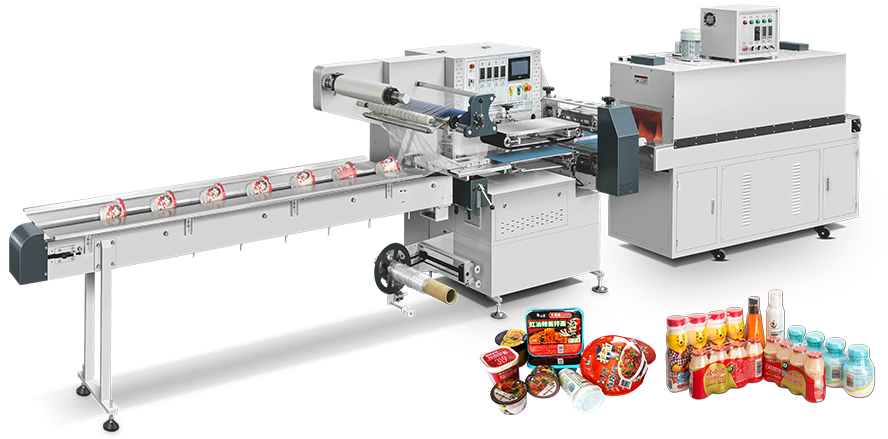
A POF film shrink packing machine, for example, needs film with consistent thickness and slip. If the roll is too thin, it can stretch unevenly and tear at the sealing jaw. If it is too thick, it may not shrink properly and can catch on the tunnel conveyor.
On a PE film shrink packing machine, the opposite problem often appears. PE is tougher, but it can also be less forgiving when the sealing temperature is too high. The film may stick to the bar, pull apart, or leave a messy seal that later opens in transit.
Cheap film is not always a bargain. A lower price per roll can quickly disappear when your scrap rate goes up and your output goes down.
Film Tension and Roll Alignment
Film tension should be firm, not tight. If the unwind brake is too strong, the film is stretched before it even reaches the sealing station. It may look fine for a few minutes, then snap under the added heat. If the tension is too loose, the film can wrinkle, fold over itself, or feed at an angle.
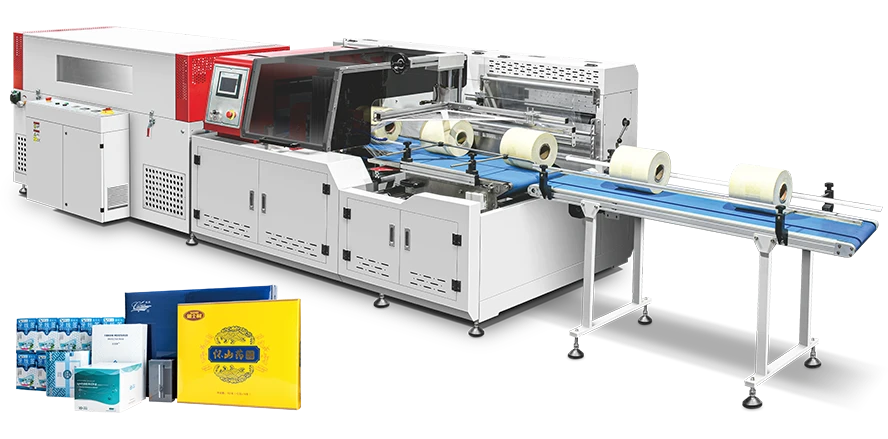
Roll alignment matters just as much. A roll that is slightly off-center can cause the film to drift. On an L-sealer shrink packing machine, that drift often shows up as a crooked seal or a film tail that catches on the next cycle.
Take a minute to check the roll holder, the guide rollers, and the film path. Sometimes the fix is as simple as resetting the roll and cleaning a sticky roller.
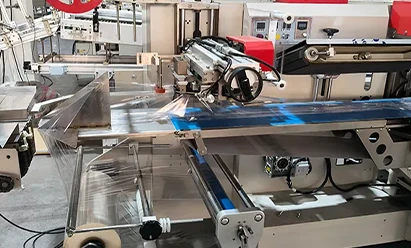
Heat, Speed and Sealing Pressure
Heat is where many film problems begin. It is also where they can be hardest to see, because the machine may run well for an hour and then fail.
Sealing Temperature Drift
Sealing bars do not always stay at the temperature shown on the panel. A worn thermocouple, a loose connection, or a failing heater can cause the actual temperature to drift. If it runs too hot, the film melts and sticks. If it runs too cool, the seal is weak and breaks when the package moves.
Check the seal quality, not just the display. A good seal is clear, even, and strong enough to hold without tearing. If it looks cloudy, stringy, or easy to peel apart, the temperature or dwell time needs attention.
Conveyor Speed vs. Shrink Tunnel Settings
A high-speed shrink packing machine can only run as fast as its tunnel allows. If the conveyor is moving faster than the film can shrink, the package enters the tunnel before the seal has cooled. The film can pull apart, wrinkle, or jam at the tunnel curtain.
The same issue appears on a sleeve wrapper shrink packing machine when the product spacing changes. Packages that are too close together can block airflow. Packages that are too far apart waste heat and reduce efficiency. Match the speed to the product, the film, and the tunnel temperature—not just the maximum rated output.
Mechanical Wear and Maintenance Blind Spots
Even a well-built machine will develop wear. The key is to catch it before it turns into a film break.
Worn Blades, Belts and Rollers
A dull blade does not cut cleanly. It tears the film, leaving a rough edge that catches on the next station. Worn belts can slip, causing inconsistent feed. Worn rollers may not grip the film evenly, so it drifts to one side.
On an automatic shrink packing machine, a small worn silicone pad on the sealing jaw can cause film to stick. That one sticky spot can stop the whole line. Inspect these parts weekly, and replace them before they fail.
A Simple Shrink Packing Machine Maintenance Routine
A practical maintenance routine does not need to be complicated. At the start of each shift, check the film path and remove debris. During the week, inspect the sealing bars, blades, and belts. Every month, check the air pressure, wiring, and tunnel curtains.
Keep a log. If film breaks happen at the same time every day, the log will show whether it is linked to a shift change, a new film roll, or a temperature cycle.
Product and Package Design Issues
Sometimes the machine is fine, but the package is working against it. Sharp corners, heavy products, or overfilled packs can cut through film or prevent a clean shrink.
Sharp Edges, Odd Shapes and Overfilled Packs
If the product has sharp edges, the film may tear as it shrinks. A simple cardboard pad or a different film gauge can solve the problem. If the pack is overfilled, the film cannot wrap evenly. It stretches too thin in one area and breaks.
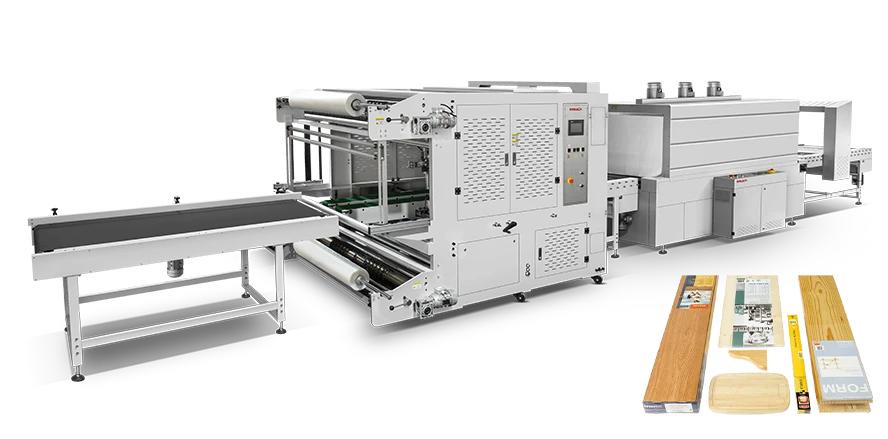
Irregular shapes are another common cause. They may need a different wrap pattern or a custom shrink packing machine setup. Do not force a standard machine to run a package it was not designed for.
When It’s Time to Call the Supplier
If you have checked the film, tension, temperature, speed, and wear parts, and the problem continues, it may be time to call your supplier. A good supplier will ask for photos, film specs, and a short video of the failure. That information helps them diagnose the issue quickly instead of guessing.
Ask about spare parts availability, technician support, and whether your machine can be adjusted for different film types. A reliable partner will help you solve the problem, not just sell you another roll of film.
Summary
Film jams and breaks are frustrating, but they are usually signs of a fixable issue. The most common causes are incorrect film tension, temperature drift, speed mismatch, worn parts, and package design problems. A Shrink Packing Machine that jams repeatedly is not necessarily a bad machine. It may simply need a closer look at the details that affect daily operation.
Focus on consistency. Check the film. Watch the seal. Listen to the machine. Keep up with maintenance. Those habits will reduce downtime and protect your output.
Have a specific production goal in mind?
Whether you are running a POF film line, a PE film operation, or a high-speed automatic shrink packing machine, the right setup can make a measurable difference. Tell us about your Shrink Packing Machine, your film, and the packages you run. Our team can help you find the cause of film breaks and recommend the right configuration for your production goals.