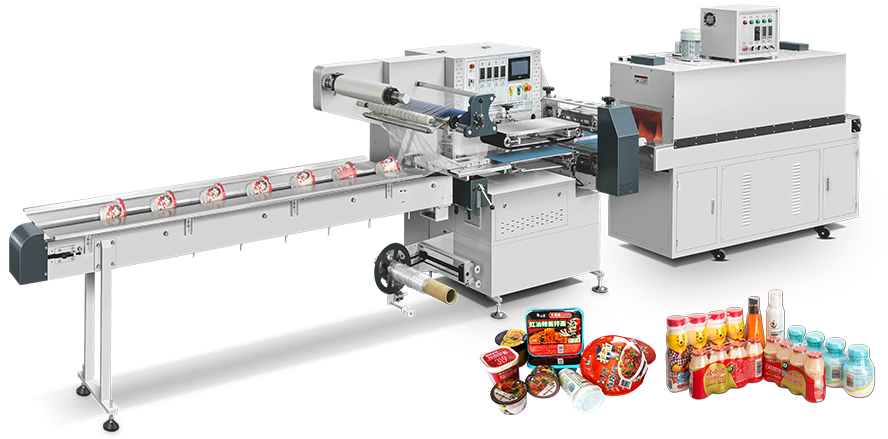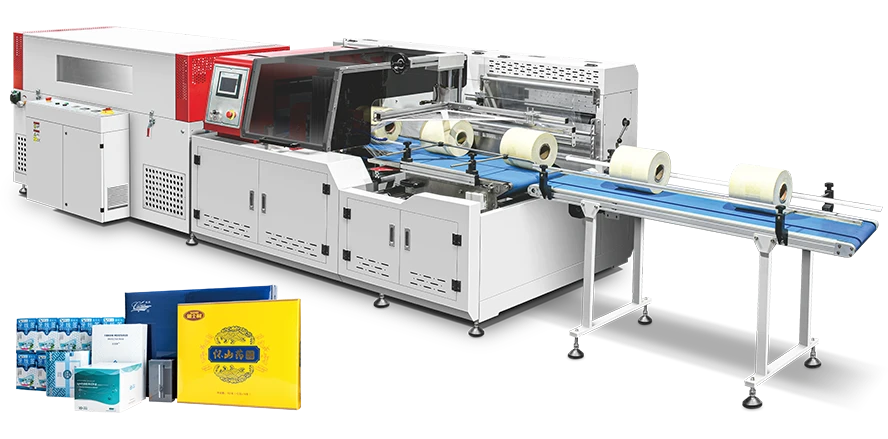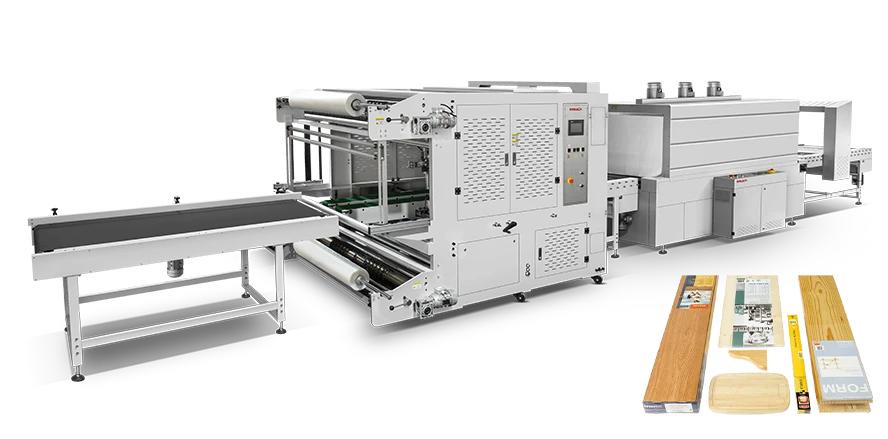

If you have spent any time around packaging lines, you have probably heard the term "servo-driven" thrown around quite a bit. But here is the thing—not all servo-driven machines are created equal. Some manufacturers slap a servo motor on one axis and call it a day. Others, like the three-servo system found on a properly engineered Automatic High Speed Shrink Packing Machine, take a fundamentally different approach.
The difference comes down to this: independent control versus mechanical dependency. And that difference shows up in everything from packaging precision to daily maintenance.
What the Three Servos Actually Control
A three-servo Automatic High Speed Shrink Packing Machine dedicates one servo motor to each of three critical motion axes: film feeding, sealing and cutting, and product infeed. Each operates independently, yet they communicate continuously through the machine's PLC control system to stay perfectly synchronized.
The first servo manages the film feed. It pulls shrink film from the roll and maintains consistent tension throughout the wrapping process. Because it adjusts in real time, the film stays flat and wrinkle-free regardless of minor variations in roll quality or ambient conditions.
The second servo controls the sealing and cutting mechanism—specifically the rotary cutter that forms the transverse seal. This is where the precision really matters. The servo ensures the cutter engages at exactly the right moment, producing clean, uniform seals without the burnt edges or inconsistent strength that plague mechanically driven systems.
The third servo drives the infeed conveyor, regulating how products enter the machine and ensuring proper spacing between each unit. This might sound straightforward, but on a high-speed line running 120 packs per minute, consistent spacing is what prevents jams and maintains output.
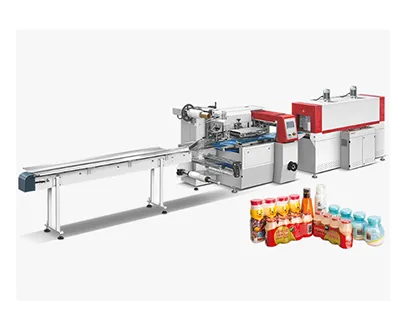
Electronic Synchronization vs. Mechanical Cam Shafts
Here is where the three-servo Automatic High Speed Shrink Packing Machine parts ways with conventional designs. Traditional shrink wrappers rely on a mechanical cam shaft to coordinate all moving parts. Every axis is physically linked through gears, cams, and linkages. Change one thing—like the product length—and you are reaching for wrenches to adjust mechanical eccentricities across the entire machine.
A three-servo machine eliminates that mechanical shaft entirely. Synchronization happens electronically through the control system. The PLC tells each servo what to do and when to do it, and closed-loop feedback ensures every axis stays in alignment. No gears to adjust. No cams to reposition.
This is what people mean when they talk about closed-loop control. The system continuously monitors actual performance against the programmed parameters and makes micro-adjustments on the fly. If the film feed drifts slightly, the servo corrects it before it becomes a problem. If the infeed conveyor speed needs to match a change in upstream production, the servo adapts instantly.
What This Means for Your Production Floor
The practical outcomes of this design are worth paying attention to.
Packaging precision is the first thing you will notice. A three-servo Automatic High Speed Shrink Packing Machine consistently holds ±1mm accuracy at 120 packs per minute. That is not a lab condition number—that is real-world, shift-after-shift performance.
Changeover time is another area where the electronic approach shines. Switching between different product sizes on a traditional machine means adjusting mechanical stops, repositioning guides, and recalibrating cam timing. On a three-servo machine, you recall a stored recipe from the touchscreen, and the servos automatically reposition themselves. What used to take thirty minutes now takes three to five.
Maintenance gets simpler, too. No mechanical cam shaft means no grease points, no worn linkages, and no oil leaks contaminating paper blanks or food-contact surfaces. The servos themselves are sealed units that require minimal attention beyond occasional inspection.
Film savings are worth mentioning as well. The precise tension control made possible by the servo-driven film feed, combined with the integrated waste film recovery device, typically saves about 20% of film material compared to conventional center-fold machines. Over a year of production, that number adds up fast.
Beyond the Three Servos
A well-built Automatic High Speed Shrink Packing Machine does not stop at the servo system. The rotary servo cutter deserves special attention because it directly affects package quality. Traditional cutters can leave ragged edges or burn the film if the timing is off. The rotary design, driven by its own servo, delivers smooth, consistent seals every cycle. No burnt edges, no weak spots, no surprises.
The shrink tunnel complements the servo system with dual temperature zones and independent temperature control. This arrangement, combined with efficient hot air circulation, reduces power consumption by roughly 20% compared to single-zone designs. The tunnel's blower speed and temperature can be adjusted independently through the same touchscreen that controls the servos, giving operators complete command over the shrinking process.
Is a Three-Servo System Right for Your Line?
The answer depends on what you value. If your operation runs the same product day in and day out and you have a maintenance team comfortable with mechanical systems, a traditional machine might still make sense. But if you are switching between multiple SKUs, dealing with labor shortages, or simply trying to reduce waste and downtime, the three-servo Automatic High Speed Shrink Packing Machine offers a compelling alternative.
The initial investment is higher than a basic mechanical machine. There is no getting around that. But the payoff comes in reduced changeover time, lower film consumption, less maintenance, and higher consistent output. For most production managers, that trade-off makes sense.
Have a specific packaging challenge in mind?
Whether you are wrapping instant noodle bowls, tissue boxes, beverage bottles, or something entirely different, the right three-servo Automatic High Speed Shrink Packing Machine can be configured to your exact specifications. Our team can walk you through the options—film types, voltage requirements, additional feeding systems, and more.